













Irwin Casino App In Canada For 2026

Irwin Casino is available in Canada, and this 2026 mobile walkthrough helps legal-age players set up play with control.

Fortune Gems 2 Slot

Table of Contents

  • The Dog House Megaways Slot
  • Lucky Joker 10 Extra Gifts Slot
  • Sword of Ares Slot
  • Floating Dragon Hold & Spin Slot
  • Leprechaun Riches Slot
  • Fruit Cocktail Slot
  • The Dog House Megaways Slot
  • Sword of Ares Slot
  • Fruit Million Slot
  • The Dog House Megaways Slot
  • Big Fisherman Slot
  • Big Fisherman Slot
  • Seven Books Unlimited Slot
  • Irwin Casino Fortune Slot
  • Sword of Ares Slot
  • Floating Dragon Hold & Spin Slot
  • 9 Mad Hats Slot
  • Floating Dragon Hold & Spin Slot
  • Big Bass Splash Slot

Getting Started With Irwin Casino App On Mobile

Mobile play works best when it feels intuitive in the right places. If you have to “figure things out” every time you open your phone, you’ll either quit out of frustration or keep tapping until you do something you didn’t plan. Imagine you’re on a short break, you just want a smooth session, and the screen keeps asking for confirmations you weren’t ready for. That’s the moment you realize setup matters.
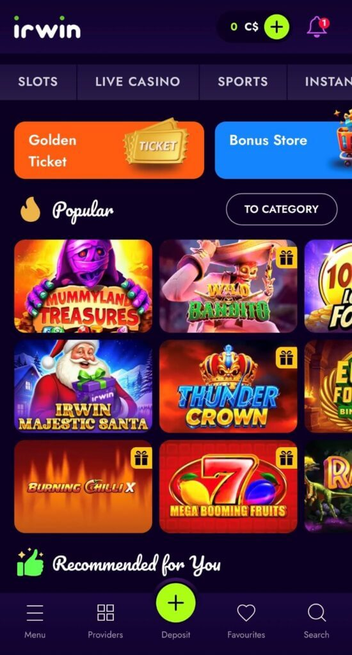
App 1

Start with the basics your device needs: enough free storage, a stable connection, and up-to-date system software. In 2026, a lot of mobile issues are not “casino issues” at all - they’re phone issues (battery saver throttling performance, too many background apps, or a browser with fifty tabs). Usually players do better when they close everything else, restart once, and run a session on a clean slate.

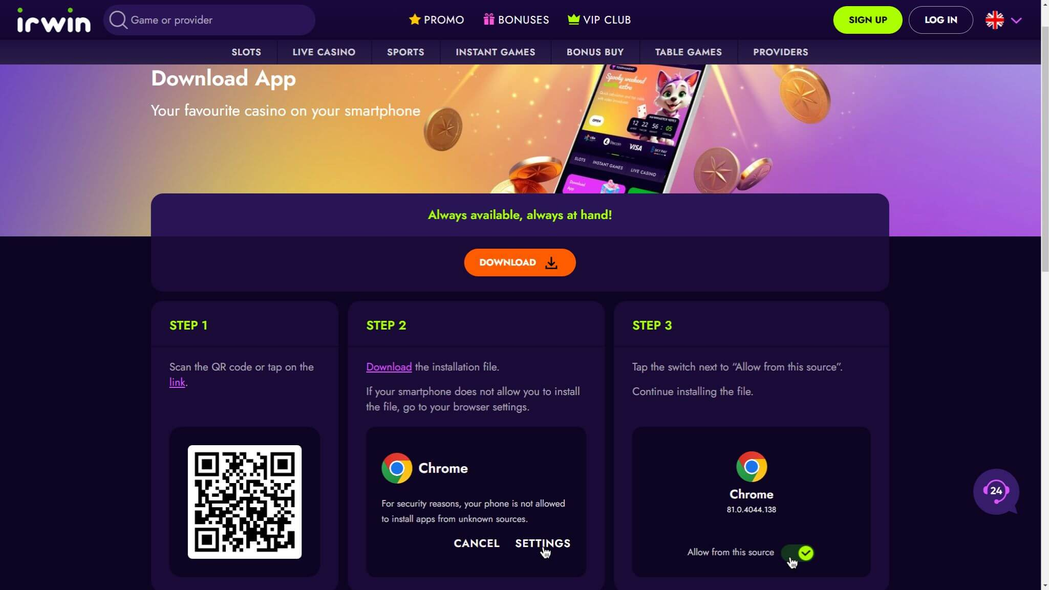
Then decide how you want to access the platform: a browser session or an installed mobile experience. The goal is not to pick the fanciest option. The goal is to pick the option you can keep consistent, so login, cashier steps, and account settings stay predictable.

Browser Play Versus Installed Experience

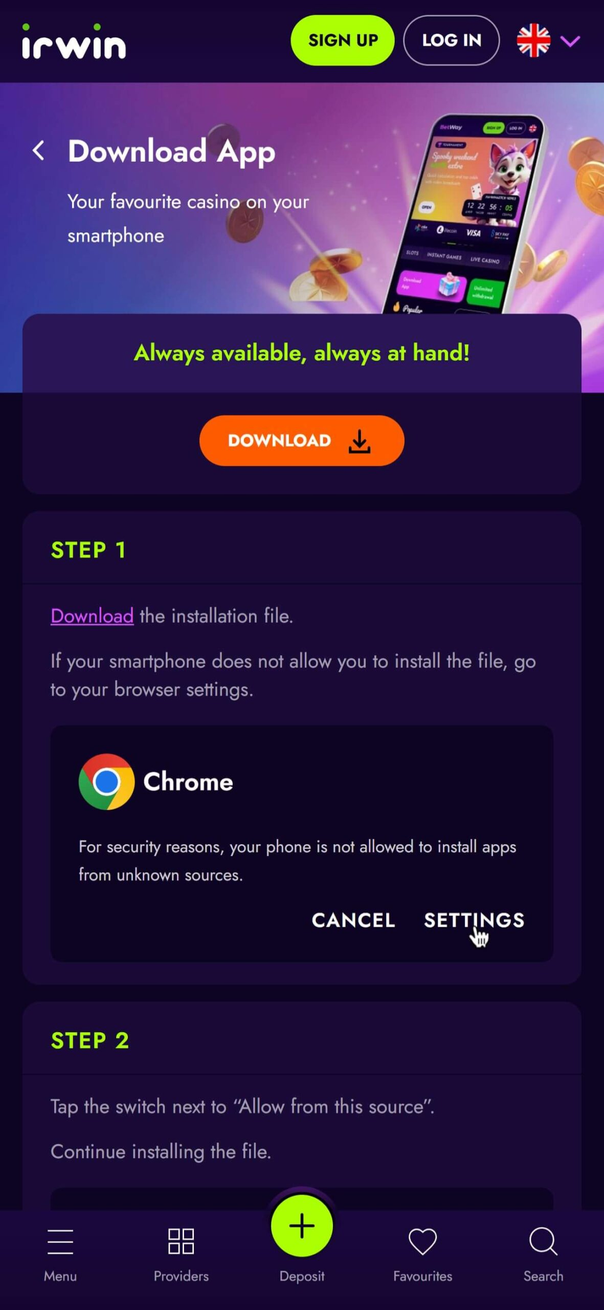
Picture this: you’re on a spotty connection and your patience is already low. A browser session can be simpler because it updates automatically and you don’t manage installs. An installed experience can feel smoother once it’s set up, but it may also demand updates and stable device storage.

The practical choice is the one that reduces friction for your real routine. If you play occasionally, browser access may be enough. If you play more regularly and want fewer steps, an install can be convenient. Either way, test the lobby first, not after you’ve already committed money to the session.

First Launch Checks That Save Time Later

Imagine you set everything up late at night, half distracted, and the next day you can’t receive a verification message because you’re logged out of your email on that phone. This is why a quick check is worth it: confirm you can access your email, confirm your phone can receive codes, and confirm you can open the cashier screen without it freezing.

Do a short “dry run” before real play: log in, browse, open settings, log out, then log in again once. It’s not busywork. It’s proof that your credentials are stored correctly and your device isn’t fighting you with outdated autofill entries.
Registration Flow That Doesn’t Create Future Problems

Registration should feel like setting up something you want to work later, not like speed-running a form. Imagine you win and want to withdraw, then you discover your profile address is missing an apartment number because you were in a hurry on day one. That’s not bad luck - it’s a small setup shortcut coming back at the worst time.

application 2

Use details that match your documents and keep your contact information current. In Canada, platforms typically use common account protection and responsible-play checks, and those checks go smoother when your profile is consistent and accurate.

Avoid the “I’ll fix it later” mindset. Later usually means when you’re tired, excited, or stressed. Fixing things while calm is what makes mobile play feel simple.

Profile Details, Messages, And Account Recovery

Picture forgetting your password on a weekend and realizing your recovery email is tied to an old phone you don’t have anymore. That kind of mess happens when recovery channels are treated like an afterthought. Use an email you can access quickly, keep your phone number current, and make sure your device can receive messages without delay.

If you use a password manager or autofill, keep one source of truth. Players get locked out because their phone saves one password, their laptop saves another, and neither is the current one. Pick a system and stick with it, so your sign-in routine stays boring.

App 3

Sign-In Habits That Keep Access Smooth

A clean sign-in routine is mostly about what you don’t do. Don’t tap submit five times. Don’t switch networks mid-login. Don’t guess passwords rapidly until you trigger a cooldown. Imagine you finally have time to play, you fail twice, and now you’re waiting because your device kept auto-filling the wrong password. That’s a preventable mood-killer.

Make your sign-in routine simple: enter credentials once, submit once, wait. If your screen is slow, treat it like a loading screen, not a challenge. If you reset your password, test it immediately and save it correctly, instead of assuming it worked and discovering later that your phone stored the old one.

Also, keep your device secure. Adult-only access isn’t just a platform rule - it’s a personal habit. Use a screen lock, avoid shared access, and log out when your phone isn’t exclusively yours.

Mobile Features That Actually Matter In Real Life

The mobile experience isn’t just “games on a smaller screen.” It changes how people behave. On a phone, choices are faster, switching is easier, and impulse is one tap away. Imagine you planned a calm session and after two quick losses you start bouncing between games like you’re trying to find the one that will “fix” the night. Mobile can encourage that pattern unless you set structure.

The most useful mobile features are the ones that reduce decision fatigue: favorites, recently played, quick search, and clear cashier history. But those same features can also pull you into longer sessions if you let the app set your pace instead of you setting it.

A good mobile routine has a beginning, middle, and end. Beginning: choose your game and stake. Middle: a short check-in (time and balance). End: stop on your rule, not on your emotion. This is what keeps play fun for adults instead of turning it into a grind.

In 2026, think of mobile play like a treadmill with speed buttons. The convenience is great, but if you keep pressing faster when you’re frustrated, it becomes uncomfortable fast. The solution is to use the speed buttons less, not more.

Favorites And Shortlists For Faster Decisions

Imagine opening the lobby after a long day and feeling your brain stall at the number of options. A favorites list solves that, but only if it’s small. Most players do better with three to five saved choices that match different moods: something quick, something steady, and one “high excitement” option for a short finale.

Keep your list honest. If a game makes you tense or pushes you into chasing, remove it. Adults often keep titles saved out of habit, then wonder why sessions feel stressful. Your shortlist should reduce stress, not preserve nostalgia.

Session Rhythm: Timer, Check-In, Stop

A session feels controlled when you can describe it in one sentence. Imagine saying, “I’m playing for 25 minutes, I’ll check in at 12 minutes, and I’m done when I hit my planned spend.” That clarity changes everything.

Use a timer. Take micro-breaks. Stand up, drink water, look away from the screen. If you return and still want to play, great. If you return and feel indifferent, that’s your sign to stop. Mobile is supposed to fit your life, not swallow it.

When A Timeout Is The Smart Move

Picture this: you’re not enjoying the session anymore, but you keep playing because you want to end on a win. That’s chasing, and it usually gets expensive. Timeouts are built for that exact moment.

Use a short break when your mood shifts. If you notice the same pattern across days, longer cooling-off tools exist for a reason. These aren’t moral judgments - they’re practical controls that help adults keep entertainment in its lane.

Deposits And Cashier Steps On A Small Screen

The cashier is where mobile speed can hurt you. Imagine you’re half-watching a show, you open the payment screen, and you approve something without really reading the amount. On a phone, it’s easy to misread numbers, switch apps mid-confirmation, and then panic when the status looks delayed.

A simple rule makes cashiers safer: one deposit per session. If you want a longer session, lower your stake or choose slower play. Don’t top up repeatedly because you feel “close” to a bonus round or a comeback. Most regret comes from extra deposits made in a stressed mood, not from the original plan.

Keep your connection stable during payment steps. Switching between Wi-Fi and mobile data mid-confirmation is a classic reason people see “pending” states and start clicking again. Stay on one network, complete the flow once, then check transaction history calmly.

Mobile Money Step

What You Do

Why It Helps

Common Pitfall

Pick a payment route

Choose one method you can track easily

Cleaner records and fewer surprises

Switching methods every session

Confirm the amount

Re-read the number before approval

Prevents accidental overspending

Rushing and misreading digits

Complete confirmations

Follow approval prompts step-by-step

Avoids stuck or delayed status

Closing the screen too early

Check transaction history

Review the status after each action

Helps spot duplicates fast

Repeating the same action

Set personal limits

Add deposit and session caps

Keeps play predictable

Setting limits only after losses

Plan cashout basics

Keep profile details consistent

Reduces review friction later

Outdated address or contact info

First Deposit As A Test Run

Treat your first deposit like a test, not a statement. Imagine you’re trying a new coffee shop: you don’t buy ten cups before tasting one. Start smaller, confirm everything works smoothly, and only then decide how you want to play in future sessions.

Pause for ten seconds before approving. Check the method, check the amount, check that you’re on a stable connection. If a transaction looks slow, don’t try again immediately. Most duplicates happen because someone panics and repeats an action that was already processing.

Withdrawal Preparation Without The Stress Spiral

Imagine you have a win and you want to withdraw immediately, then you notice your profile still has an old address from two moves ago. That’s when people start clicking randomly and making it worse. Keep your profile current before you request a withdrawal, not after.

If identity checks appear, submit clear photos in good light with all corners visible and no glare. Then wait for the status to move. Repeated resubmissions and multiple messages often slow things down because the review trail becomes messy.

Security And Responsible Play Controls For Adults

Security is part device habit, part account habit. Imagine you leave your phone on a table, a notification pops up with sensitive information on the lock screen, and someone nearby glances at it. It’s avoidable. Use a screen lock, reduce lock-screen previews, and log out if your phone is shared even occasionally.

Responsible play controls work the same way: they protect you from your worst “five minutes.” Set limits when you’re calm, not after a rough session. If you wait until you’re frustrated, your brain will negotiate with you and you’ll set something you don’t stick to.

In Canada, it’s normal for platforms to support age-restricted access and player protections. Respect the guardrails and use them. Adults who treat limits as normal tools tend to enjoy the experience more, because play stays intentional.

Password Storage That Doesn’t Betray You

The number one reason people think a login is “broken” is simple: their device saved the wrong password. Imagine resetting your password, then your phone keeps auto-filling the old one. You try twice, fail twice, and you’re in a cooldown.

After a reset, do a confirmation loop: log in successfully, log out, log in again. Delete duplicate autofill entries. Keep one clean credential source so you’re not juggling three versions across devices.

Cooling-Off, Breaks, And Self-Exclusion

Picture feeling tired or irritated and still playing because it’s easy to keep tapping. That’s where breaks help. A short timeout interrupts the loop and gives you room to decide like an adult again.

If the pattern repeats across days, longer cooling-off tools exist for a reason. Self-exclusion is a stronger boundary for people who want a clear reset that doesn’t rely on willpower in the moment. Using these tools early is usually the confident move, not the desperate one.

Support And Troubleshooting When Something Feels Off

Most mobile problems are boring, and that’s good news because boring problems have boring fixes. Imagine the lobby loads halfway and then stalls. The worst move is to keep tapping and opening multiple games. Close the app or browser, clear background tasks, and restart once. If your device is low on storage, free some space. Mobile performance often depends on the phone more than people want to admit.

Payment screens can be the most sensitive. If a deposit shows a slow or pending status, don’t repeat the action right away. Check transaction history first. Repeating deposits is how people create duplicates, then spend the next hour trying to untangle it with support.

When you contact support, write a message that can be acted on. Include what you did, what you expected, what happened, and the approximate time. If money is involved, include the amount and the payment method. Imagine the difference between “Fix this now” and “Deposit attempt at 19:10, amount X, method Y, status shows pending.” One is noise, the other is a location pin.

Keep one conversation thread per issue. Opening multiple tickets feels like “pushing,” but it can slow resolution because the story splits across messages. Adults get faster solutions when they keep communication clean.

Simple Fixes Before You Message Anyone

If the screen is slow, restart your phone. If the lobby is glitchy, close background apps. If the cashier is lagging, switch to a stable connection and try once more calmly. Imagine you’re troubleshooting a streaming app - you wouldn’t press play fifty times; you’d reset the environment. Same idea here.

Also, check your own settings. Battery saver modes can throttle performance. Notification permissions can block confirmations. Autofill can sabotage logins. Fixing those small things often solves the “platform problem” instantly.

FAQ

Set a timer before you open the lobby and decide your stopping rule in advance, then treat that rule as the end of the session, not a suggestion. Imagine you planned 20 minutes, hit a small loss, and feel the urge to keep going to “fix it” - that’s the exact moment to stop. A short check-in halfway through (time and balance) helps you stay honest, and a quick timeout can break the impulse loop when your mood shifts.

Start by checking whether your phone is auto-filling an old password, because that causes repeated failures more often than people realize. Picture resetting your password and then selecting the wrong saved entry the next day - it feels like the platform changed, but it’s your device. Remove duplicate saved credentials, complete one clean password reset, then log in, log out, and log in again once to confirm the new credentials are stored correctly.

It often comes down to connection stability and background apps, not a mysterious system issue. Imagine your phone switching between Wi-Fi and mobile data mid-confirmation - the screen can look stuck even if it’s still processing. Stay on one stable network during payment steps, keep your device charged, and avoid bouncing between apps until you see a clear status update in transaction history.

Use a one-deposit rule for the session and set your stake before you start, then don’t “fix” a bad run by adding more funds. Picture approving a second deposit while distracted and later realizing you didn’t even enjoy the extra play - that’s avoidable with one simple boundary. If you feel tempted to top up, pause for ten minutes, take a break, and decide whether you’re still playing for fun or chasing a feeling.

Keep your profile details consistent and current, and be ready to provide clear document photos if requested. Imagine trying to withdraw quickly and discovering your address format doesn’t match your proof of address because you shortened it during registration - that’s the kind of friction that creates delays. Good light, full corners visible, no glare, and one clean submission usually reduce back-and-forth, especially when you stay calm and avoid repeated resubmissions.

Use a timeout the moment play stops feeling like entertainment and starts feeling like you’re trying to recover or prove something. Imagine you’re irritated, you keep switching games, and you’re no longer enjoying the session - that’s a clear signal to pause. Cooling-off tools are for adults who want structure during vulnerable moments, and using them early usually keeps the experience healthier than relying on willpower.

Send one clear message with specifics: what action you took, what you expected, what happened, and the approximate time, plus the amount and payment method if money is involved. Imagine support reading “Something is wrong” versus “Deposit attempt at 19:10, amount X, method Y, status pending” - one can be solved quickly, the other can’t. Keep one issue per message and avoid opening multiple tickets, so the conversation stays clean and easy to follow.

🇬🇧 English